
Showing 37–48 of 144 results
End of content
End of content
Explore Bunds Australia’s range of bunding and spill containment products for safe liquid storage and spill management. Shop bunded pallets for drums and IBCs, bunding trays, floor bunding, collapsible bunds and drum storage solutions. The range also includes spill kits, absorbents and chemical storage cabinets. Find suitable containment solutions, including IBC bunded pallets, for industrial worksites.
Showing 37–48 of 144 results


End of content
End of content
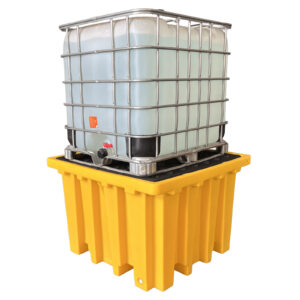
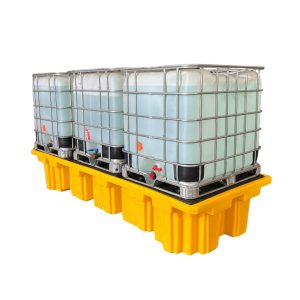
Most sites holding liquids work on two layers. Bunding is the first: the drum sits on a bunded pallet, the IBC sits over a moulded sump, the decanting area sits inside floor bunding, and anything escaping is held in the containment volume underneath. That is passive protection, working whether or not anyone is watching. Chemical bunding and pallet bunding both describe the same principle applied at different scales, from a two-drum bund up to a triple IBC footprint.
Spill kits and absorbents are the second layer, for the spill that happens outside a bund or overtops one. A failed valve during decanting, a dropped container on a hardstand, a leak in a transport yard: none of those land conveniently inside a sump. General purpose, oil and fuel, hazchem and marine kits each match a different liquid profile, and loose absorbents keep kits stocked while handling the routine drips that would otherwise run a kit down.
Specifying across the range starts with what is stored, in what containers, and where. The number and size of containers set the bund footprint. The products held set whether poly bunding or a specific absorbent grade is appropriate. Whether the area is covered or exposed decides if covers and shrouds are needed, since an open bund collects rainwater and water in a sump is capacity no longer available for a spill. Flammable storage cabinets handle the separate question of where flammable liquids sit when not in use. Confirm the containment capacity and storage arrangements you specify meet the requirements that apply to your site and the class of liquid being held.
Bunding is secondary containment. It is a barrier or sump placed under or around stored liquids to catch a leak or spill before it can reach soil, drains or waterways.
A bund contains passively, holding whatever escapes a container. A spill kit is active response gear used after a spill has happened, usually outside a bund or beyond what one can hold.
Bunded pallets for drums and IBCs, bunding trays, floor bunding, collapsible bunds, drum trolleys and drum racking bunds, plus spill kits, absorbents, flammable storage cabinets and lithium-ion battery storage and charging cabinets.
Start with the number and size of containers, which sets the footprint. Then check the containment volume against the requirement for the products and volumes you hold at that location.
Polyethylene resists a broad range of chemicals and will not corrode, which suits aggressive products, wash-down areas and outdoor exposure. Compatibility should still be checked against the stored liquid.
Outdoors, generally yes. An open bund collects rainwater, and water sitting in the sump is capacity no longer available for a real spill, so it has to be checked and cleared.
Floor bunding creates a contained area on an existing surface, usually with flexible or modular barriers. It suits decanting points, transfer areas and anywhere a fixed sump is impractical.
A collapsible bund folds flat for transport and sets up on site, with walls that drop for a vehicle to drive in. It suits temporary works, remote sites and mobile plant.
Match the kit to the liquid stored. General purpose for mixed non-aggressive liquids, oil and fuel for hydrocarbons, hazchem for acids and alkalis, marine for operations over water.
They answer different questions. A bund catches what escapes a container. A flammable cabinet governs where flammable liquids are held when not in use. Many sites need both.
Check sumps for cracks, residue and standing water, and confirm the rated containment volume is still available. Outdoor units need checking more often because rainwater accumulates between inspections.
Requirements vary by the class of liquid, the volume held and the jurisdiction. Confirm what applies to your site and the products you store before specifying a bund.
No products in the cart.

To provide the best experiences, we use technologies like cookies to store and/or access device information. Consenting to these technologies will allow us to process data such as browsing behaviour or unique IDs on this site. Not consenting or withdrawing consent, may adversely affect certain features and functions.
Join our mailing list to receive the latest updates, exclusive offers, and news straight to your inbox. Don’t miss out!
We respect your privacy. Unsubscribe anytime.